 Contact Us
 1-800-843-8771

You Get Da Time? I Get Hawaiian Time.

Podcast: Play in new window | Download
Life in Hawaii doesn’t run on the same clock most visitors are used to. It’s Called Hawaiian Time. Flights land on schedule, dinner reservations exist, and workdays still start in the morning. What’s different is the relationship people have with time itself. That relationship has a name, and if you’ve spent even a short while here, you’ve already felt it.
Hawaiian Time isn’t about being careless or disrespectful. It’s about priorities. People come before schedules. Experiences matter more than minutes. And while that can catch first-time visitors off guard, it’s also one of the reasons so many people fall in love with Hawaii and keep coming back.
Here’s what you need to know before you mistake a slower pace for a lack of intention.
Hawaiian Time Isn’t About Being Late
One of the biggest misconceptions visitors bring with them is that Hawaiian Time means nobody shows up when they say they will. That’s not really true. Locals get to work, kids get to school, and planes don’t wait around because someone felt like stopping for spam musubi.
What’s different is flexibility.
If you tell a friend to meet you for breakfast at 8 a.m., they’ll be there. It might be 8:05. It might be 8:10. What it won’t be is rushed, stressed, or apologetic in the way mainland culture often demands. The assumption here is that life happens. Traffic happens. A conversation with a neighbor happens. And none of that is a crisis.
This mindset can feel uncomfortable if you’re wired to see punctuality as a measure of respect. In Hawaii, respect shows up in other ways. People show up at all. They stay present. Don’t stare at their phones while you’re talking, and don’t bolt the second the clock tells them it’s time to move on.
Where Hawaiian Time Comes From
Hawaiian Time didn’t start as a joke or a stereotype. It’s rooted in how life worked long before clocks ruled everything.
Ancient Hawaiians tracked time using natural markers. The moon phases mattered. The seasons mattered. Tides, winds, and rainfall mattered. Days weren’t chopped into fifteen-minute increments because they didn’t need to be. Life followed nature, not the other way around.
In addition to this, plantation-era Hawaii shaped everyday language and behavior in lasting ways. Workers from different cultures had to communicate quickly and simply. That’s where Pidgin English developed, and with it came phrases that still shape how locals talk about time today.
“Bum-bye” means later, but not in a specific way.
“Laytahs” means eventually, without urgency.
“Watevas” means it’ll get done when it gets done.
These aren’t excuses. They’re signals. They tell you not to stress, not to push, and not to turn every moment into a deadline.
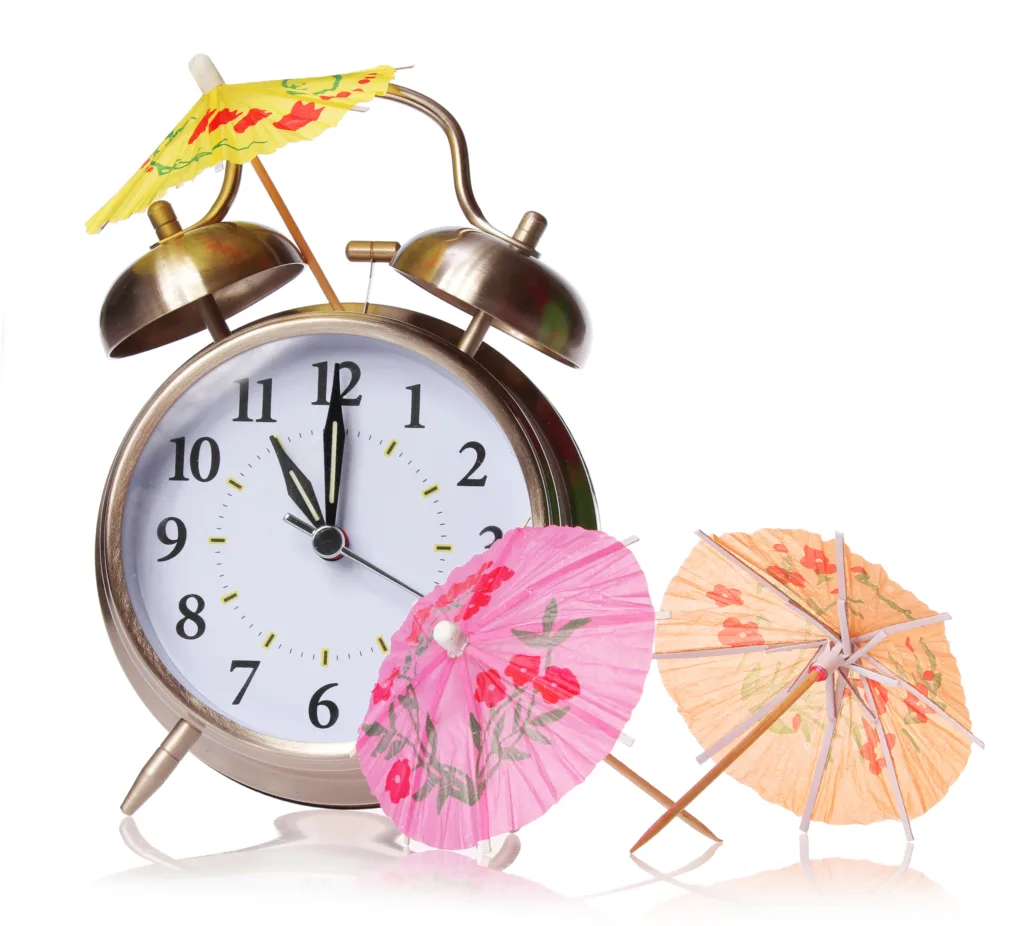
The Hawaiian Time Clock Explained
There’s a popular image of a Hawaiian Time clock floating around, and it’s funny because it’s accurate.
Instead of numbers, you’ll see labels like:
Watevas
Bum-bye
Laytahs
That’s not laziness. That’s prioritization.
If a luau is scheduled for 6 p.m., it doesn’t mean people are confused about what 6 p.m. is. It means the experience matters more than the exact second it starts. The sun setting, the guests arriving, the food being ready, the musicians settling in. All of that matters more than flipping a switch at precisely 6:00.
What’s more, this flexibility creates space for connection. Nobody’s checking their watch every five minutes. Nobody’s stressed about running behind. The moment unfolds the way it’s supposed to.
Hawaiian Time vs Mainland Time
Mainland time culture tends to treat time like a scarce resource that’s constantly being wasted. Every delay feels personal. Every schedule slip feels like a failure.
Hawaiian Time treats time as something you live inside, not something you fight against.
That difference shows up everywhere.
Conversations don’t feel rushed.
Meals take longer.
People stop what they’re doing to talk story.
Plans adapt instead of breaking.
Alternatively, if you try to force mainland expectations onto island life, you’ll feel frustrated fast. Traffic will annoy you. Lines will feel slow. People won’t move with the urgency you’re used to.
That friction isn’t Hawaii’s fault. It’s just a mismatch of expectations.
Why Visitors Struggle With Hawaiian Time
First-time visitors often arrive with packed itineraries. Hour-by-hour plans. Multiple islands in one week. Every activity scheduled back-to-back.
That approach doesn’t leave room for Hawaiian Time to work its magic.
When a tour runs a little late or dinner takes longer than expected, it can feel like something’s gone wrong. In reality, nothing has. You’re just experiencing the island the way it actually functions.
Here’s what you need to know: Hawaii isn’t impressed by how busy you are. The islands reward people who slow down enough to notice what’s happening around them.
The ocean doesn’t rush. The mountains don’t hurry. And the best moments usually aren’t the ones you planned down to the minute.
Hawaiian Time in Daily Island Life
Hawaiian Time doesn’t mean chaos. Businesses still operate. Appointments still exist. Deadlines still matter.
What’s different is the buffer built into everything.
A contractor might give you a window instead of a time.
A friend might say “later today” and mean it.
A gathering might start when enough people arrive, not when the invitation says it should.
This doesn’t apply evenly across every situation. Hospitals, airports, and schools run on strict schedules. Tourism-related services often operate closer to mainland expectations because visitors need structure.
But once you step outside those systems, you’ll feel the shift.
Hawaiian Time and Respect
One thing visitors often misunderstand is respect. On the mainland, respect is shown through punctuality and efficiency. In Hawaii, respect is shown through presence and patience.
Interrupting someone to stay on schedule is considered rude.
Rushing a conversation feels dismissive.
Acting irritated about delays sends the wrong message.
In addition to this, elders are given time to speak. Children aren’t rushed through moments. Community events unfold at their own pace.
Respect here is relational, not transactional.
The Role of Hawaiian Time in Aloha Spirit
Aloha isn’t just a greeting. It’s a way of moving through the world. Hawaiian Time supports that.
Slowing down creates space for kindness.
Flexibility allows for grace.
Patience keeps interactions human.
When people aren’t obsessed with the clock, they’re more open. They listen better. They react less harshly. That warmth visitors feel isn’t accidental. It’s built into how time is handled here.
Hawaiian Time Isn’t an Excuse
It’s important to say this clearly. Hawaiian Time isn’t a free pass to be irresponsible. Locals still expect accountability. If you repeatedly fail to show up or follow through, people notice.
The difference is how mistakes are handled.
Instead of anger, there’s usually understanding.
Instead of confrontation, you have a conversation.
Instead of shame, we adjust.
What’s more, relationships matter more than rigid enforcement. Once trust is built, flexibility flows naturally.

Adjusting Your Expectations as a Visitor
If you’re visiting Hawaii for the first time, the best thing you can do is build margin into your plans.
Schedule fewer activities per day.
Leave gaps between reservations.
Expect things to take longer than advertised.
This isn’t about lowering standards. It’s about aligning with reality.
Alternatively, if you try to cram everything in and run on a mainland pace, you’ll spend more time stressed than relaxed. Hawaii will still be beautiful, but you’ll miss the feeling that keeps people coming back.
Hawaiian Time and the Statewide Time Difference
There’s also the literal time difference to consider. Hawaii is behind the mainland by several hours, depending on the season. That alone puts the islands out of sync with the rest of the country.
New Year’s arrives later.
News breaks earlier on the mainland.
TV shows air hours after social media spoils them.
Maybe that’s part of the charm. Hawaii has always existed slightly out of step with the rest of the world. That distance creates perspective.
When everyone else is rushing toward the next thing, Hawaii is still finishing the current moment.
Why Hawaiian Time Feels So Good
Visitors often say they feel calmer here without knowing why. They sleep better, breathe deeper. They laugh more.
Hawaiian Time plays a role in that.
There’s less pressure to perform.
Less urgency to optimize every minute.
Less noise telling you to hurry up.
Instead, there’s permission to just be where you are.
Learning to Live With Hawaiian Time
Some visitors fight it. Others lean into it. The ones who lean in usually have the better experience.
They stop checking the clock.
No lingering over meals.
Talk story with strangers.
They let plans shift.
That mindset change doesn’t stay in Hawaii either. Many people take it home with them. They realize not everything needs to be rushed. Not every moment needs to be maximized.
Hawaiian Time teaches a quieter lesson. Life doesn’t need to move faster to feel full.
It’s Not That Hawaii Is Slow
Here’s the truth most people eventually realize. Hawaii isn’t slow. It’s everyone else that’s moving too fast.
The islands didn’t fall behind. They chose a different rhythm.
And once you feel it, really feel it, it makes sense why locals protect it so fiercely.
Time here isn’t something to conquer. It’s something to share.
So if someone tells you they’ll be there bum-bye, don’t stress. They’ll show up. And when they do, they’ll be fully there.
That’s Hawaiian Time.