 Contact Us
 1-800-843-8771

Hawaii Weather: What Travelers Need to Know Right Now
Podcast: Play in new window | Download
If you’ve been following recent headlines, you’ve probably seen a lot of coverage about storms across the islands. Flooding, heavy rain, flight disruptions, and dramatic footage have dominated the conversation. That kind of exposure naturally raises concerns, especially for first-time visitors planning a trip.
Let’s reset the narrative with clarity and context.
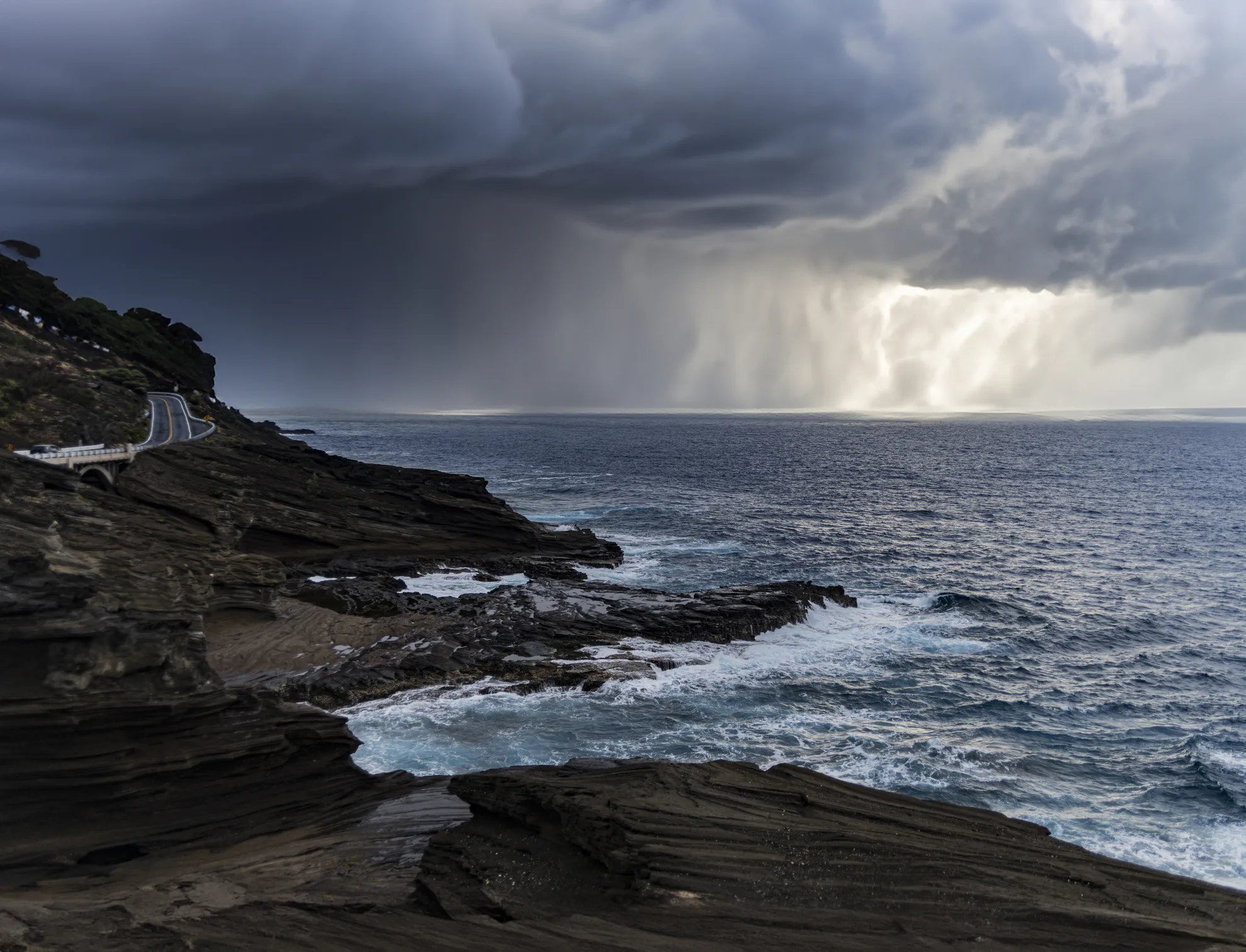
The recent conditions have been tied to a series of Kona storm systems—low-pressure patterns that bring prolonged rain and unsettled conditions. These events are real, impactful, and in some areas have caused significant damage. At the same time, they are not the everyday norm, and they do not affect every part of the state equally.
Understanding how these systems work—and what they mean for your travel plans—is the difference between unnecessary stress and a well-informed decision.
What a Kona Low Means for the Islands
A Kona low is a winter storm system that develops near the islands and shifts wind patterns. Under typical conditions, steady trade winds come in from the northeast, creating a mix of sunshine and brief showers. A Kona low reverses that pattern and draws moisture up from the south.
That shift introduces warmer, moisture-heavy air, which leads to longer-lasting rainfall and, at times, thunderstorms. These systems often linger rather than passing quickly, which is why conditions can feel persistent.
They also tend to impact leeward areas—locations that are usually dry and protected. That’s part of what makes these events feel unusual to visitors who expect predictable sunshine in resort areas.
On average, one or two of these systems form during the winter months between November and March. Seeing multiple systems develop back-to-back, like we’ve recently experienced, is far less common and plays a big role in why conditions have felt so intense.
Rainfall Totals and Why This Event Stands Out
This hasn’t been a typical stretch of rainy days. Some areas across the islands have recorded rainfall totals exceeding four feet during the course of the storm cycle. That’s a significant amount of water in a short period of time.
Daily rainfall records were broken in several locations, and in some cases rain fell at extremely high rates within short timeframes. That combination—high totals and intense bursts—creates the perfect setup for flooding.
Officials have compared the severity of this event to the 2004 flooding in Mānoa, one of the most impactful flood events in recent history. Early projections suggest damages this time could reach into the hundreds of millions, possibly approaching a billion statewide.
At the same time, it’s important to keep perspective. Conditions vary widely across the islands. Not every location is experiencing the same level of impact.
Why Flooding Happens So Quickly in Hawaii
The geography of the islands plays a major role in how storm systems behave.
Steep mountains, narrow valleys, and short waterways mean rain doesn’t just sit—it moves. Water flows downhill quickly, filling streams and drainage areas faster than many visitors expect.
That’s why flash flooding can develop rapidly, even when rainfall doesn’t seem extreme at first glance. Roads can become unsafe within minutes, and low-lying areas can flood quickly once the ground becomes saturated.
Understanding this helps explain why safety guidance during storms is taken so seriously.
Current Travel Conditions and What’s Actually Happening
One of the biggest misconceptions right now is that the entire state has shut down. That’s not the case.
Airports across the islands remain open and operational. Flights are continuing, although there have been some interisland cancellations and delays due to weather conditions.
Airlines have advised travelers to check flight status frequently, enable notifications, and allow extra time at the airport. These are standard precautions during weather events.
The transportation system is still functioning, and visitors are still arriving and enjoying their vacations.
For official updates, you can check the National Weather Service here:
https://www.weather.gov/hfo/
Safety Tips Visitors Should Follow
If you’re traveling during or just after a storm, a few simple precautions can make a big difference.
Avoid driving through standing or moving water. Even shallow flooding can hide strong currents or debris.
Be cautious around streams and drainage areas. Water levels can rise quickly and without much warning.
Ocean conditions are another important factor. After heavy rain, runoff flows into the ocean carrying sediment and bacteria. It’s best to wait 48 to 72 hours before swimming, especially if the water appears brown or murky.
Some parks, trails, and scenic areas may be temporarily closed. These closures help ensure safety while crews complete inspections and cleanup.
Hawaii’s Seasonal Weather Patterns
Hawaii doesn’t follow the same seasonal patterns as the mainland, but there are still clear differences throughout the year.
Summer generally brings drier conditions, calmer waters, and more consistent sunshine.
Winter tends to be more variable, with larger surf and the potential for systems like Kona storms.
Even during the wetter months, rain is rarely constant across all areas. Conditions can change quickly depending on elevation, location, and wind patterns.
That variability is one of the defining characteristics of Hawai’i weather.
Should You Cancel Your Trip?
This is the question most travelers are asking right now.
For most people, canceling isn’t necessary.
If your trip is scheduled weeks or months out, current conditions should not impact your plans. Weather patterns are expected to stabilize as these systems move out.
If you’re traveling soon, flexibility becomes more important. Adjusting plans, shifting activities, or allowing for changes in your itinerary can help you make the most of your trip.
This is where understanding Hawai’i weather—and having access to real-time local insight—makes all the difference.
Flights, Notifications, and Planning Ahead
During periods of unsettled conditions, staying informed is key.
Travelers should check flight status regularly, enable airline notifications, and confirm their contact information is up to date.
Arriving early at the airport and allowing for extra time can help reduce stress if schedules change.
These small steps go a long way in keeping your trip running smoothly.
Why Local Insight Makes a Difference
Weather apps can only tell part of the story. They don’t always reflect what’s happening on the ground in specific areas.
Local insight helps you understand which areas are affected, where conditions are improving, and what adjustments make sense.
That’s especially important for first-time visitors who may not be familiar with how Hawai’i weather varies from one part of an island to another.
If you’re planning your trip, these guides can help you get started:
https://www.hawaii-aloha.com/blog/things-to-do-in-hawaii-big-island/
https://www.hawaii-aloha.com/blog/best-places-to-visit-in-hawaii/
https://www.hawaii-aloha.com/blog/best-snorkeling-in-hawaii-a-guide-to-the-most-stunning-underwater-spots/
The Bottom Line for Travelers
This recent storm cycle has been significant, and in some areas, the impacts have been serious.
At the same time, conditions are improving, and the islands remain open and welcoming to visitors.
Travel is continuing, flights are operating, and most visitors are still able to enjoy their time here with minor adjustments.
The key is understanding Hawai’i weather, respecting current conditions, and staying flexible.
When you approach your trip with the right expectations, Hawai’i weather becomes something you plan around—not something that defines your entire experience.